
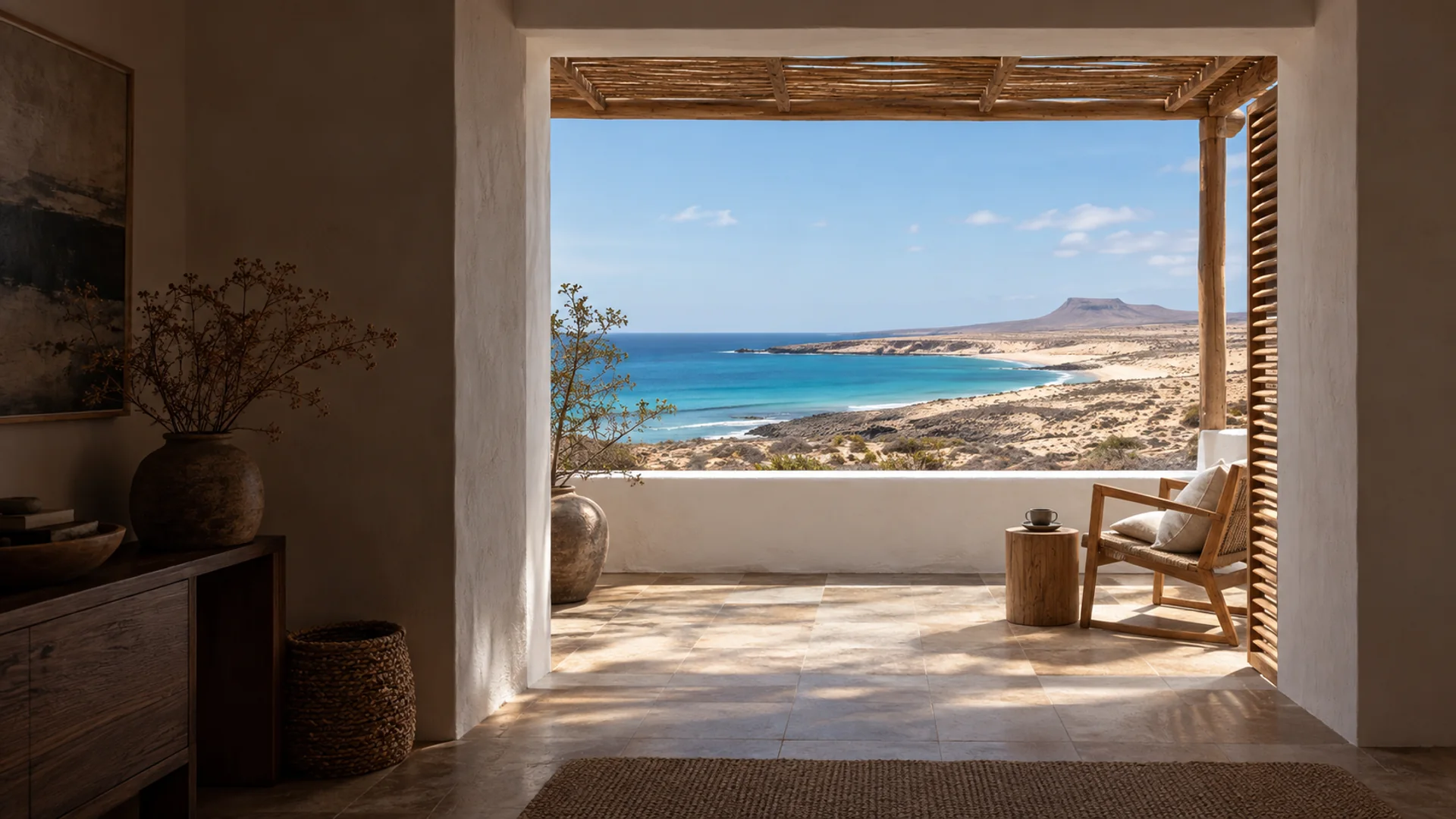
A house in Cape Verde can be a place to return to, a lifestyle choice or a property also used for rental. To choose wisely, your interest in the location should be accompanied by a clear understanding of what you are buying, the costs involved and how the property will be managed over time.
This guide helps you prepare the journey: clarify your needs, assess the context, gather documents and ask the right questions before committing. Legal, technical and tax checks should then be carried out on the specific property with the appropriate professionals.
Start with your purpose
The starting point is the intended use of the property. A house for frequent stays, a residence for long periods and an apartment primarily for rental each require different considerations.
If you plan to use it yourself, consider the time you will spend on the island, your family’s needs, daily services and the ease of reaching the house. If you also intend to rent it out, ask how your own stay dates will coexist with guest availability and who will handle the management.
Before starting your search, prepare a brief profile:
- Use: residence, personal stays, rental or a combination.
- Features: number of rooms, outdoor spaces, accessibility, services and acceptable maintenance.
- Total budget: purchase, expenses, possible works, furnishings and a reserve for management.
- Timing: when you would like to use the house and what flexibility you have.
This profile allows you to compare consistent proposals. The listed price alone does not indicate how well a house fits your project.
Choosing the island and location
Cape Verde should be understood through its islands and, within each, through neighbourhoods and localities. Boa Vista, Sal, Santiago, São Vicente and Maio each merit specific assessment: do not automatically attribute the characteristics of one territory to a property in another.
For each area you are considering, check actual connections on the dates you will travel, access to the house, health services, shops, water and electricity availability and the possibility of assistance when you are away. Observe the context at times other than those of your initial visit.
Proximity to the sea is one characteristic to consider. Add exposure to wind, noise, privacy, ventilation, quality of access routes and condition of common areas. Ask which constructions or works are planned nearby and on which documents the answer is based.
To start learning about the archipelago you can consult the Cape Verde page. To understand the operational conditions of projects, see the in‑depth article in Operating in Cape Verde.
Understanding exactly what you are buying
A ready‑made apartment, a villa under construction and a plot with a development plan each require different documents and checks. Before discussing payments, clarify the object of purchase and what is included in the price.
For an existing property
Compare the commercial description with the documents and the actual condition. Clarify how areas are calculated, which spaces are exclusive property, which are common and whether parking, terraces or storage are included in the purchase. A technical inspection can identify necessary works and anticipated costs.
For a property under construction
Request the project, relevant authorisations, specifications, payment schedule and delivery conditions. Clarify how modifications, delays, incomplete works and differences from the presented materials will be handled. Photographs, renders and commercial floor plans must be compared with the contractual annexes.
For a plot of land
Have the transferred right, boundaries, access, constraints and permitted uses verified. Purchasing the land should not be interpreted as confirmation that the desired project can be realised. For a development initiative you can explore the path dedicated to developers.
Documents and checks before signing
The documentation must enable identification of the property, the seller and the right being sold. It is useful to organise a single file, indicating for each document who issued it, when, and which checks remain to be completed.
The Ministry of Justice’s guide to notarial acts lists, for property purchases and sales, identification of the parties and NIF, certidão predial and certidão matricial certificates, any preliminary agreements and powers of attorney; additional documents are required for companies. The document also states that the notarial office determines the requirements for each case. Source: official notarial documentation.
The NIF is the Cape Verdean tax identification number. The government portal describes its role in tax classification and economic transactions; the procedures and documents to be submitted must be confirmed in relation to your circumstances. Source: GOV.CV, NIF registration.
Cadastre and land registry: two separate checks
The National Institute for Territory Management distinguishes the cadastro predial, which identifies and describes properties, from the registo predial, which relates to rights. A floor plan or a cadastral reference should therefore not be read alone as a complete verification of ownership. Source: INGT, Cadastro Predial.
With the appointed professional, clarify at least the following points:
- Who holds the right and who has the authority to sign the sale?
- Do the description, areas and boundaries match in the documents and in reality?
- Which charges, mortgages, encumbrances or third‑party rights need to be verified?
- Is the use of the property and the works carried out consistent with the relevant authorisations?
- For an apartment, how are the unit, common parts and service charges documented?
If discrepancies arise, have them clarified in writing how and when they will be resolved and what impact they will have on the purchase.
Prepare a comprehensive budget
Request a statement that separates the property price from other outlays. Each item should specify the amount or calculation basis, the party bearing it, the payment timing and what is excluded.
Before and during purchase: professional checks, any translations and powers of attorney, notarial and registration fees, applicable taxes, bank costs and transfers. Also have any obligations in your tax residence country verified.
To make the house usable: agreed works, furniture, appliances, connections or activations, fittings and handover. Check whether the amounts include transport, installation and taxes.
During ownership: condominium fees, utilities, maintenance, possible insurance, management and tax obligations. For common areas ask how the shares are determined and how extraordinary expenses are handled.
Taxes and charges cannot be reduced to a single percentage applicable to every transaction. Before committing, request an up‑to‑date calculation specific to that property, that contract and your circumstances.
If you are planning financing
Ask the bank for a specific assessment of requirements, down‑payment, term, currency, rate, fees and disbursement conditions. An initial simulation does not equate to credit approval. Align contractual deadlines with the actual financing terms.
From the visit to handover
The visit is most useful when you arrive with a checklist of items to verify. Spend time on the house, the common areas and the neighbourhood; compare what you see with the available documents and note any answers that require confirmation.
An Inspection Tour can help you understand the context and arrange a discussion with the team. The visit does not replace the documentary and technical checks of the purchase.
Before a reservation or a preliminary agreement, have the property, conditions, deadlines, payments and possible failure scenarios examined. Clarify the nature and purpose of each amount requested, refund conditions and the documentation you will receive. Keep contracts and receipts via a traceable process.
For the final transfer, the GOV.CV portal also describes a digital procedure that includes property identification, data confirmation, payment of charges, signing and registration confirmation. Whether you can use it for your transaction and the required formalities must be verified with the competent offices. Source: GOV.CV, Compra e Venda de Imóvel.
At handover, prepare a record: condition of the premises, fittings, keys, meter readings, plant documentation, any works to be completed and contacts for assistance. Also verify with the appointed professional that the formalities related to the transfer are completed.
Managing the house when you are away
Before purchase it is useful to know who can inspect the property, carry out maintenance and keep you updated. Define the included activities, costs, spending authorisations and reporting methods.
If you intend to rent, request an assessment that separates gross income, management fees, cleaning, utilities, maintenance, taxes and periods without guests. Have the obligations for the intended activity and any condominium restrictions verified.
An occupancy or rent forecast is a hypothesis that must be justified and updated. Also consider a scenario with revenues below expectations and clarify how personal use of the house affects its availability for rentals.
Frequently asked questions
Does buying a house automatically grant residency?
It should not be assumed. The official e‑Residência portal presents the Green Card route with specific conditions and its own documentation. Before linking the purchase to a personal move, verify the requirements and procedure with the competent authority. Source: e‑Residência, Green Card.
Can I purchase without being present at every step?
Notarial documentation includes representation by power of attorney. The appointed professional must clarify which powers are needed, how to prepare the document and which formalities apply if it is issued abroad. The availability of digital services does not make these checks redundant.
How long does a purchase take?
The timetable depends on the property's documentation status, the parties involved, any financing and, for new builds, the construction stage. Request a sequence of steps and responsibilities specific to your transaction, with the conditions that could alter it.
Where do I start with MGM?
Tell us how you would like to use the house, which islands you are considering, your indicative budget and timeline. The discussion allows us to check alignment with MGM projects and define the next steps. You can start from the projects presented on the website or submit a dedicated purchase enquiry.
To prepare for the first discussion
- The intended use of the property and the essential features.
- The islands or locations you are considering.
- The indicative overall budget and any financing requirement.
- The period you would like to visit and the period you wish to use the house.
- The projects you have already seen and the questions you wish to explore.
These details are sufficient to start. Identity documents, bank details and other confidential documentation may be requested later via dedicated channels.
Sources and scope. Official references consulted on 17 September 2026, cited in the relevant paragraphs. The guide provides general guidance and does not replace legal, tax or technical advice on an individual purchase. It does not constitute an investment offer or a performance forecast. Procedures and requirements must be verified as of the transaction date.