
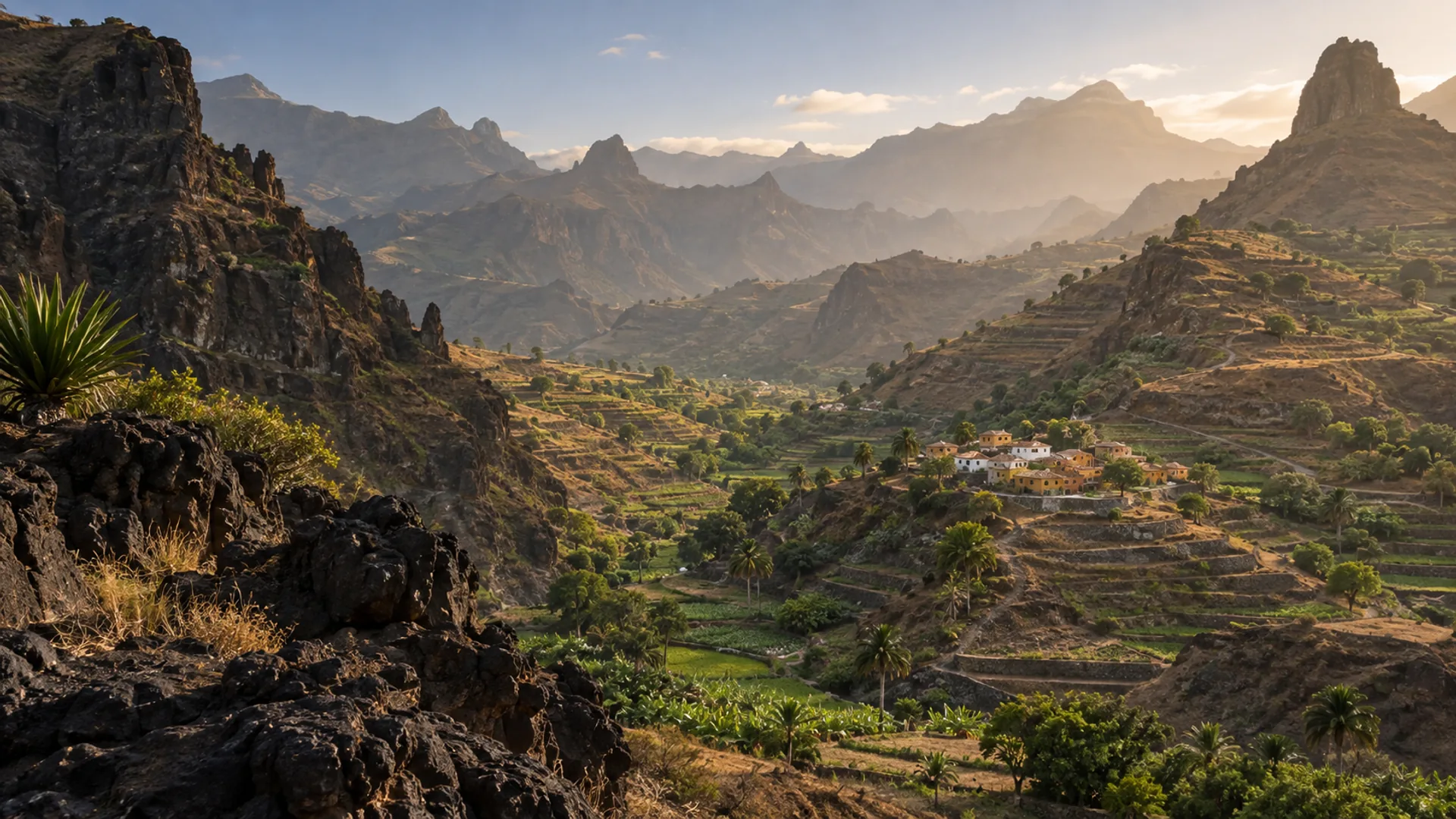
Santiago offers a property perspective that requires distinguishing the capital from the rest of the island. Those seeking a home to live in, a solution for work stays or a development project must start from the concrete use, neighbourhood and services. This guide helps prepare the comparison without treating the whole of Santiago as a single market.
Praia and other places
The Santiago fact sheet of the Embassy of Cape Verde in Brazil presents the largest island of the archipelago and lists Praia, the capital, together with other references such as Assomada, Tarrafal and Cidade Velha. This variety invites the creation of an itinerary that aligns with one’s objective: the requirements of an urban residence do not coincide with those of a stay in a coastal location.
For Praia it is useful to think by neighbourhood and daily routes. Where will the main activities take place? How are work, schools, services or appointments reached? A short distance on the map should be verified considering access, gradients, transport used and usual timings.
For the other locations on the island, the inspection must also include the organisation of travel and remote management. The choice requires a specific comparison, not the automatic extension of values or conditions observed in the capital.
Living, working and staying
Before selecting a property, clarify which functions it must serve. A home for permanent living requires attention to space layout, light, ventilation, storage, privacy and services. For work stays, connectivity, accessibility and arrival organisation may be particularly important.
If you plan to let the property, identify your intended guests or tenants and the expected length of stays. The financial model should reflect that specific market segment, with relevant management terms, costs and documentation. Economic activity in the capital alone does not establish demand for a particular apartment.
Compare properties with similar locations, condition, size, amenities and contractual terms. An asking price in one neighbourhood is not a reliable benchmark for the entire city.
Heritage and local context
Santiago is also home to Cidade Velha, the historic centre of Ribeira Grande, a UNESCO World Heritage site. It offers an insight into the island’s history and identity and deserves a visit in its own right, separate from viewing properties.
For a project in a historic or scenic setting, check the restrictions and procedures that apply to its exact location. A heritage designation does not establish development rights, permission for a change of use or identical conditions for surrounding plots.
A visit should therefore combine exploring the area with technical meetings. Images, stories and first impressions help you discover a place; financial commitments require specific documents and evidence.
What to look for during a viewing
- Access and mobility: the building entrance, pedestrian routes, any parking provision, available transport and ease of arranging deliveries or assistance.
- Property services: the availability and condition of water, electricity and connectivity, the building’s systems and responsibility for their maintenance.
- Living context: noise, views, privacy, use of common areas and activities present in the immediate vicinity.
- Documentation: correspondence between property, floor plans, intended use and rights, to be examined with appointed professionals.
Record your observations in a comparison sheet and distinguish what you have checked from what you have been told. For a building requiring refurbishment, arrange a technical inspection and an assessment of the works before finalising the budget.
Planning a development on Santiago
For a plot or urban development, the initial dossier should bring together the property’s availability, the proposed development, demand to be verified and existing infrastructure. The feasibility assessment should cover timescales, service connection costs, construction site organisation and future building management.
A developer may seek support with a specific need: initial assessment, technical coordination, operations, marketing or project structuring. MGM’s role is defined for each assignment, with agreed tasks and responsibilities. The property development guide explains this process.
Discussing your plans with MGM in Praia
MGM has an operational office in Praia’s Palmarejo Baixo neighbourhood. Before arranging a meeting, send a brief description of your objective, the location or property you are considering and the stage you have reached. An office presence does not imply that projects are available in every neighbourhood or elsewhere on the island.
You can prepare the checks for a purchase with the dedicated guide, or explore the services for developers. The team will agree on meetings and subsequent steps according to the request.
Territorial guide from MGM Intelligence. The sources describe geography and heritage; the real‑estate considerations pose questions to be verified on the specific case. They are not market estimates, planning certifications or promises of availability.